
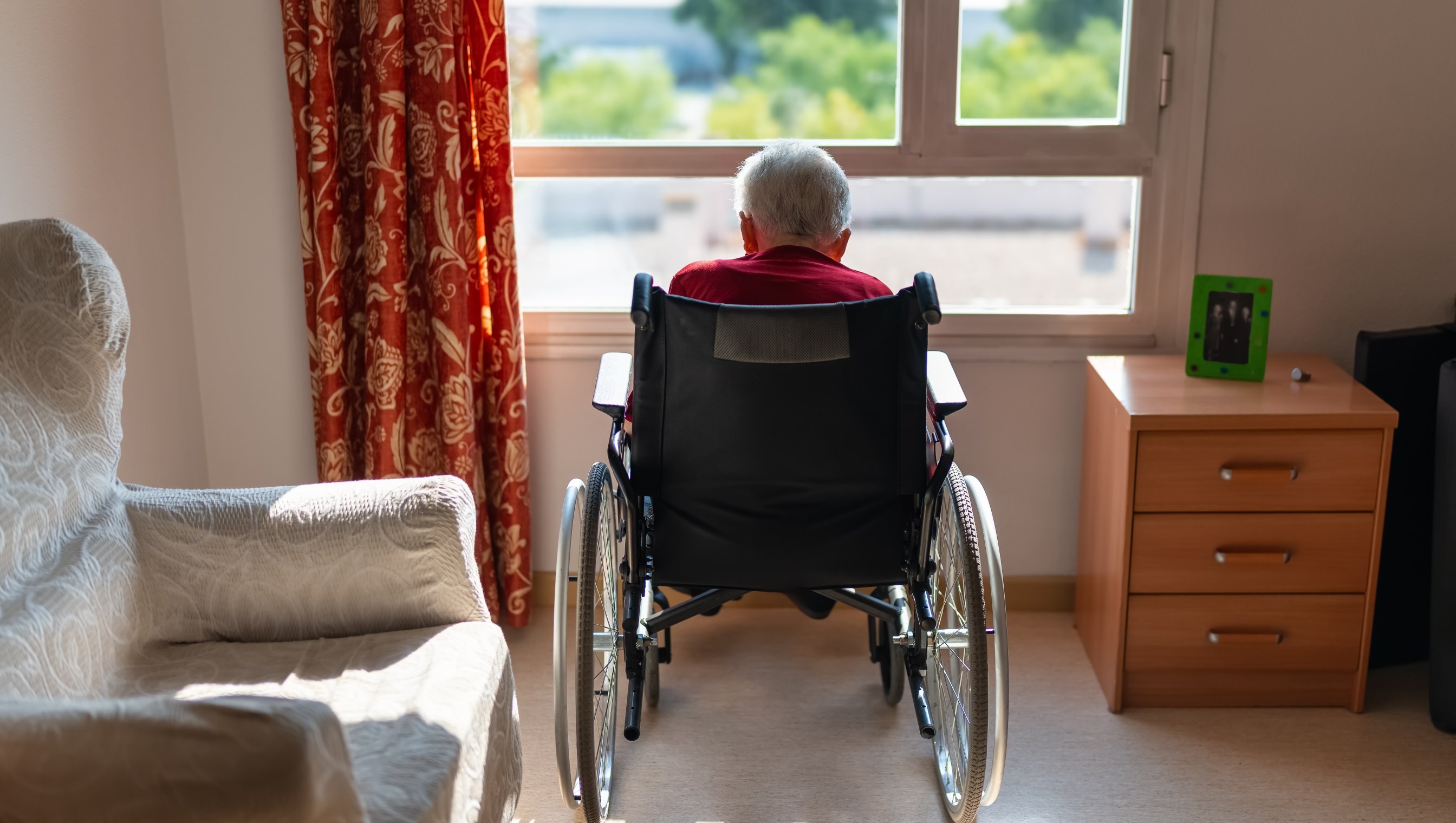
Mellom pasientens behov og sykehjemmets rammer
Summary report in English
About Ukom and this report
This chapter is an English summary of the more comprehensive report published in Norwegian by the Norwegian Healthcare Investigation Board (Ukom).
Ukom is an independent national body that investigates serious adverse events and risk areas in the Norwegian health and care services, with the aim of improving patient safety by identifying systemic factors and supporting learning across the health and care services. Ukom does not assess individual culpability, assign blame, or have the authority to issue sanctions or undertake regulatory action. That role sits with the supervision authorities which operate separately.
Background
Ukom investigated the care of two nursing home residents in two Norwegian municipalities. The residents, whom we have called Leif and Ragnvald, had multiple illnesses and experienced a gradual deterioration in their health before they died. Both had relatives who were closely involved and who at times assessed their needs differently from the healthcare professionals. The relatives were concerned that necessary treatment and care were not always provided.
Today’s nursing homes care for residents with increasingly complex conditions, severe frailty and extensive care needs. For many long-term residents, the nursing home serves both as their home and as a place where they receive medical treatment and care. The increasing care needs place a growing demand on municipalities already facing shortage of qualified staff and limited financial resources.
This investigation examines how these limiting conditions affect decisions concerning treatment, psychological care and family involvement. It also considers whether municipal leaders have sufficient information about the residents’ needs, service capacity, and the consequences of prioritization decisions.
The patient stories
Leif
Leif was in his late nineties and had several underlying conditions, including Alzheimer's disease. As his health and functioning gradually deteriorated, his relatives believed that some measures introduced by the nursing home had reduced his quality of life. When his condition worsened, they wanted him to be referred to hospital for assessment. The doctors believed he was too ill for hospitalisation and that the best care would be to receive palliative care in the nursing home. His relatives were concerned that he was not receiving necessary healthcare.
Leif suffered an epileptic seizure and became bedbound. His level of consciousness fluctuated, and his varied nutritional intake required close observation. Healthcare personnel considered Leif to be in the final phase of life. The nursing home had introduced several measures to prevent falls, including bed rails. Leif had climbed over a bed rail and was found on the floor. A medical examination raised suspicion of a skull-base fracture. Leif was in severe pain and received pain relief through a syringe pump. He did not regain consciousness and died a few days later. The head injury sustained in the fall was considered the probable cause of death.
His family believed that the nursing home’s staffing situation contributed to Leif not receiving the supervision he needed. They were concerned that he did not receive help when he needed it and therefore attempted to get out of bed on his own.
Ragnvald
Ragnvald was in his late eighties and had several chronic illnesses that made him dependent on medical equipment. Shortly after he moved into the nursing home, he lost his wife, who lived in the same facility. His relatives believed that Ragnvald needed more psychosocial support than the nursing home was able to provide. They experienced the follow-up as being primarily focused on food, medication and personal care, with limited attention to social contact, activity and what mattered to him.
When Ragnvald developed abdominal pain, his relatives wanted him referred to hospital for assessment. The nursing home doctor consulted the specialist health service, and it was decided that he should remain in the nursing home. On the day he died, his family experienced the situation as poorly coordinated and marked by uncertainty. A post-mortem examination showed that he had died from an intestinal obstruction.
Findings
Patients' complex needs challenge professional and organisational conditions
Decisions about treatment and care for nursing home patients involve complex assessments. Healthcare professionals must provide necessary healthcare while avoiding treatment that offers little expected benefit or places an unnecessary burden on the patient. These decisions require balancing frailty, functioning, quality of life, wishes and values against the potential benefits and burdens of treatment. The answer is not always straightforward.
The investigation shows that doctors and nurses may have limited contact with individual patients. Decisions about treatment therefore depend largely on observations made by the personnel who provide day-to-day care. In the nursing homes investigated, some of this work was carried out by assistants without formal healthcare qualifications.Training in clinical observation varied among the assistants, and training procedures were not always known or practiced.
Task sharing may help nursing homes use scarce professional resources more effectively, but it may also increase the distance between qualified personnel and patients. Ukom finds that this must be based on competence. Task sharing is not sustainable if staff are expected to take on responsibilities they are not qualified to perform. Municipalities must assess the consequences for the overall clinical care when tasks and responsibilities are distributed in new ways.
Making balanced treatment decisions for patients with complex needs require relevant clinical experience and access to professional support. Recruitment difficulties meant that some doctors had limited postgraduate clinical experience and required close supervision. Support must be organized and should not depend on the availability of an experienced doctor.
Physicians are often guided by disease-specific guidelines to support treatment decisions. However, applying such guidelines can be challenging when frail nursing home residents have multiple concurrent illnesses. Balanced clinical judgement is therefore essential, as disease-specific recommendations cannot always be applied directly to frail nursing home residents and may point in different directions. Nursing homes need structures that support supervision, interdisciplinary discussion and ethical reflection when treatment decisions involve conflicting considerations.
Cooperation with relatives affects treatment and care
Relatives often hold important knowledge about a resident’s previous and current level of function, health, preferences and values. This is particularly important when dementia or serious illness limits the resident’s ability to describe their own symptoms and needs.
The investigation found that relatives and healthcare personnel sometimes assessed the resident’s needs differently. They had access to different information and could interpret and give different weight to the same observations. Information from relatives was not always clearly included in the overall basis for decisions about treatment and care.
Different assessments may arise because the parties have access to different information or interpret the same information differently. Collaboration does not mean that relatives’ suggestions must always be followed. However, their knowledge and concerns must be heard, explored and assessed seriously. When differing perspectives are not examined together, the basis for decisions may be incomplete. The aim is not necessarily agreement, but a shared understanding of what the different assessments are based on.
The investigation shows that competence in working with relatives varies and is often dependent on individual employees. Several healthcare professionals had received no systematic training and had developed their skills mainly through experience. National guidance and tools were not widely known or consistently used. Working with relatives is a professional skill that must be developed and maintained through training, clear responsibilities and shared practice.
The nursing homes had established meetings with relatives, but these did not always support the need for ongoing dialogue. Communication often took place informally and was fragmented and dependent on who was on duty. More structured arrangements are needed to enable relatives to share knowledge, receive information and engage in dialogue as the patient’s condition changes.
Clarifying expectations is often used when relatives and services disagree. However, shortcomings in care cannot be explained simply by relatives' expectations. Clarifying expectations cannot compensate for inadequate services or failure to meet legal requirements. It must be a mutual and ongoing process that creates a shared understanding of patients’ rights, professional standards, priorities and available capacity.
Psychosocial care is insufficiently visible in management information
The investigation found that the provision of psychosocial care varied according to staffing levels and workload. Such care included emotional support, conversation, social contact and individually adapted activities that helped residents experience belonging and meaning in everyday life.
Healthcare personnel incorporated conversation and social contact into personal care and other daily tasks whenever possible. Activities and individual follow-up were provided when time and staffing allowed. When resources were limited, psychosocial care was among the tasks that could be postponed or omitted. Relatives and volunteers therefore played an important role. Although their contribution is valuable, it must not become a prerequisite for meeting residents' psychosocial needs.
Municipal management information provided limited insight into how psychosocial care and individual follow-up were provided. Managers found it difficult to monitor the care provided to individual residents, and incident-reporting systems did not adequately capture omitted care. Over time, staff adapted to working under pressure, affecting both which tasks were completed and the quality of care provided. These adaptations were not always reported as deviations from expected practice.
When management information mainly reflected completed and measurable tasks, omitted care and its consequences became less visible. This limited the ability of nursing home and municipal leaders to recognise these issues and their implications for patient safety.
The municipalities responsible for the nursing homes investigated had been under financial pressure for some time. Staff and managers described having to balance budgets and staffing levels against residents' right to safe and adequate care. However, the information available to administrative and political decision-makers did not always show which needs were not being met, how staff adapted their practice, or the risks these adaptations created. Without such knowledge, it is difficult to assess whether services have the staffing, organisation and capacity needed to meet residents' needs.
Recommendations
Ukom makes three recommendations.
1.Ensure that competence and professional support in nursing homes correspond to the needs of the current patient population.
Ukom recommends that municipalities ensure that competence and professional support in nursing homes reflect the needs of the current patient population. Detecting changes in residents’ condition and making appropriate treatment decisions require relevant competence and experience among doctors and other personnel involved in their daily care.
Municipalities should ensure that competence develops in line with changes in tasks and responsibilities. Personnel who follow residents in their daily lives must have the clinical observation skills needed for the tasks they perform. Doctors and other healthcare personnel must also have access to professional support and supervision when they are uncertain, as well as opportunities for interdisciplinary discussion and ethical reflection.
2. Ensure that collaboration with relatives is an integrated part of professional practice in nursing homes.
Ukom recommends that municipalities ensure that cooperation with relatives forms an integrated part of professional practice in nursing homes. Relatives’ knowledge and experience should be used in assessments of treatment and care. National guidelines and tools for collaboration with relatives should be included in training and used in daily practice.
This requires clear responsibility, appropriate arenas for dialogue and systematic competence in involving relatives, handling disagreement and clarifying expectations. Observations and information from relatives should be obtained, documented and made available to relevant personnel across professional groups.
3. Ensure that management information provide insight into how nursing homes meet residents’ overall needs and how priorities affect patient safety.
Ukom recommends that municipalities establish management information that gives administrative and political leaders knowledge of how nursing home services meet residents’ overall needs and of the consequences that priorities have for patient safety.
Management information should reflect treatment, nursing care, psychosocial care and individual follow-up. It should also include the experiences of residents, relatives and staff and make visible which parts of the service become difficult to provide when resources have to be prioritized. Administrative leaders should use this information to communicate risks and consequences to the political level, while political leaders should use it when setting priorities and determining the capacity of services.